An innovative laboratory of AI and VR has opened in ATU as part of the GreenTech Horizon project.
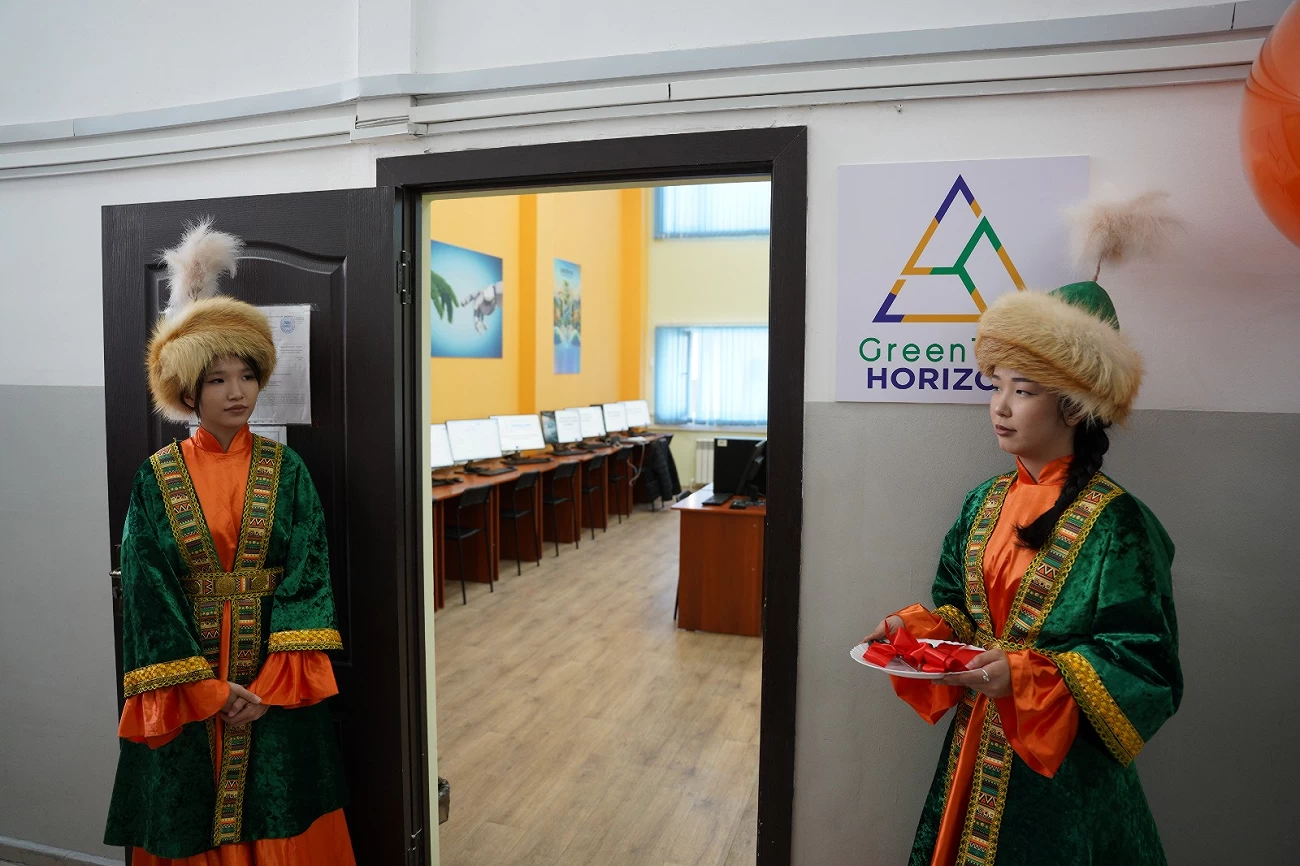
An innovative laboratory of Artificial Intelligence and Virtual Reality has opened in ATU as part of the GreenTech Horizon project.
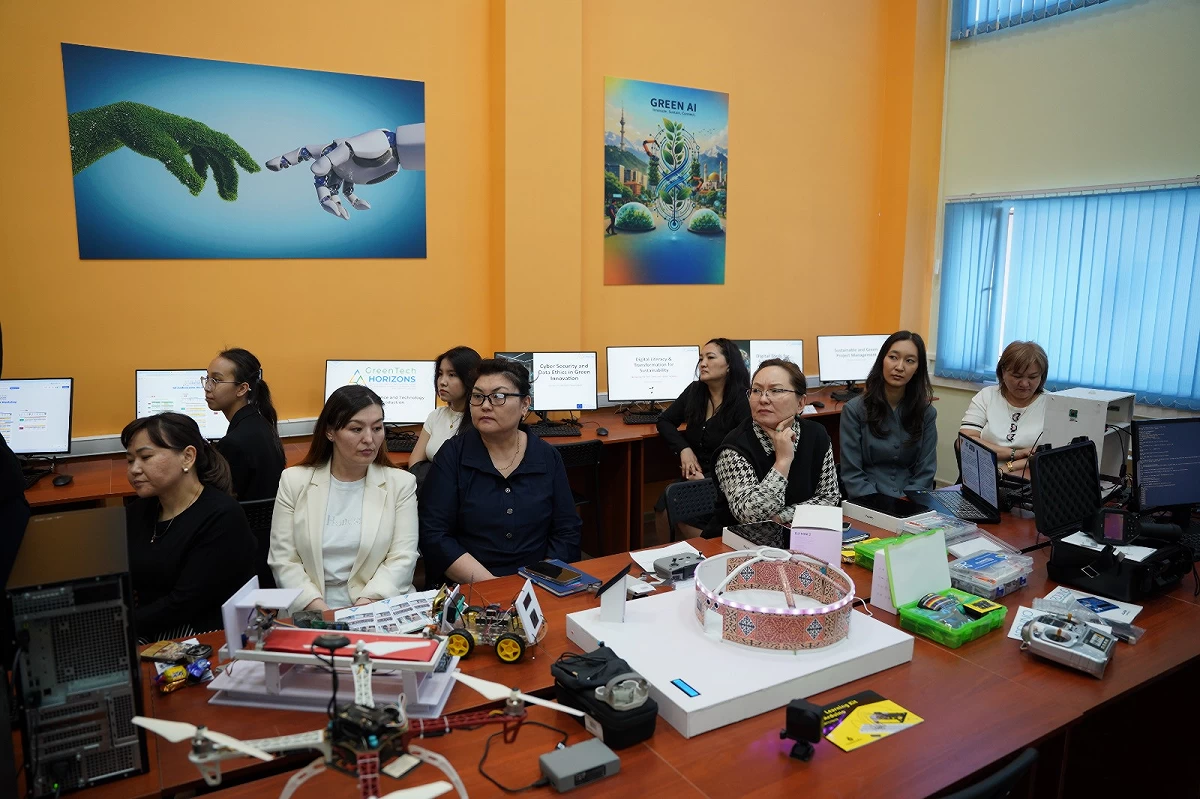
ATU has taken an important step towards implementing the international agenda of digitalization and green technologies. The university hosted the grand opening of the Artificial Intelligence and Virtual
Reality Laboratory, created with the support of the Erasmus+ program as part of the ongoing GreenTech Horizon (GTH) project.
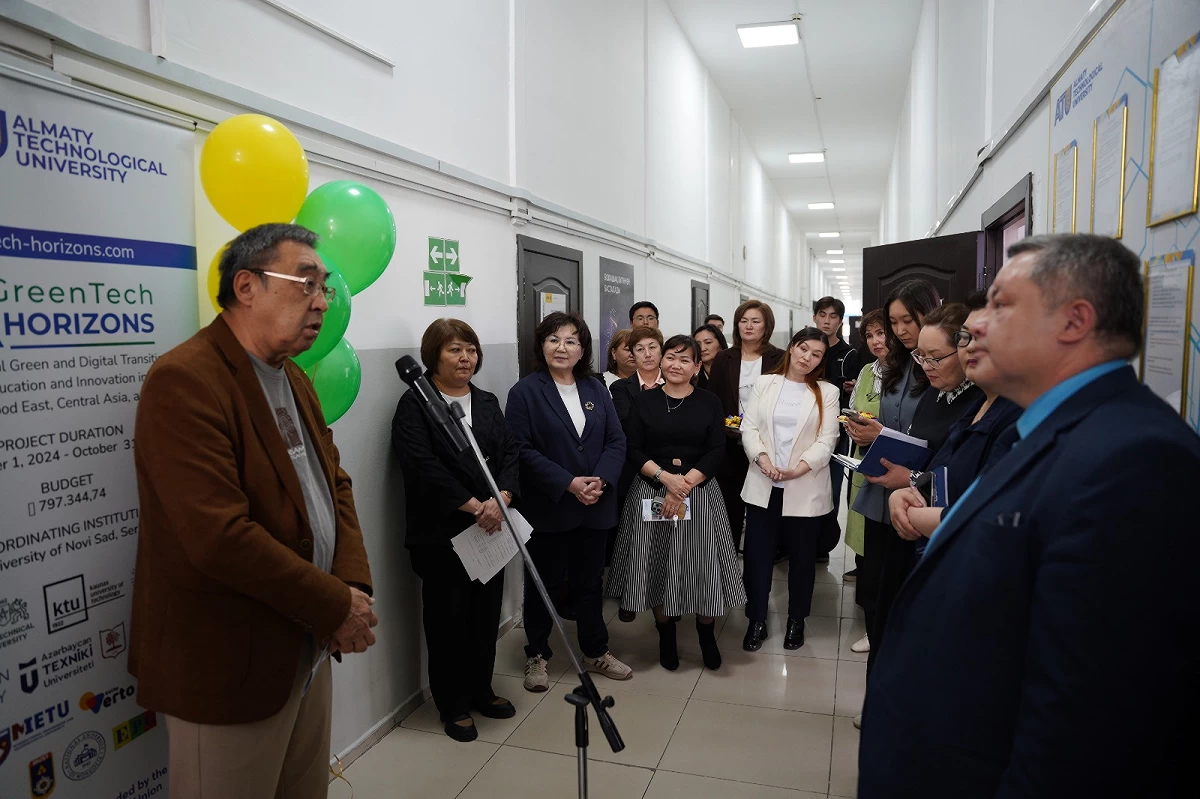
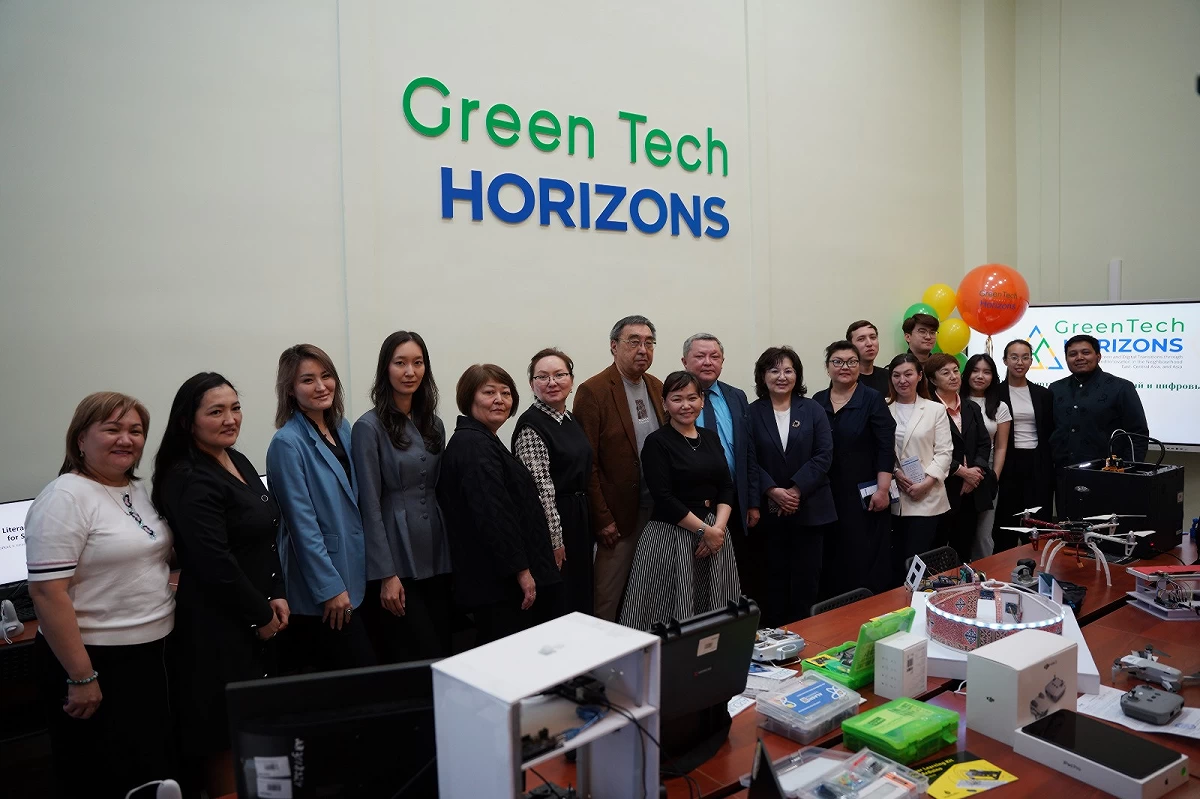
The opening ceremony was led by Bahodir Azimjonovich Aliyev, Vice Rector for Science and Innovation of ATU, Doctor of Physico-Mathematical Sciences, Associate Professor. The event was attended by representatives of leading universities of Kazakhstan and representatives of ATU partner companies.
Updating educational programs: a Triangle of competencies
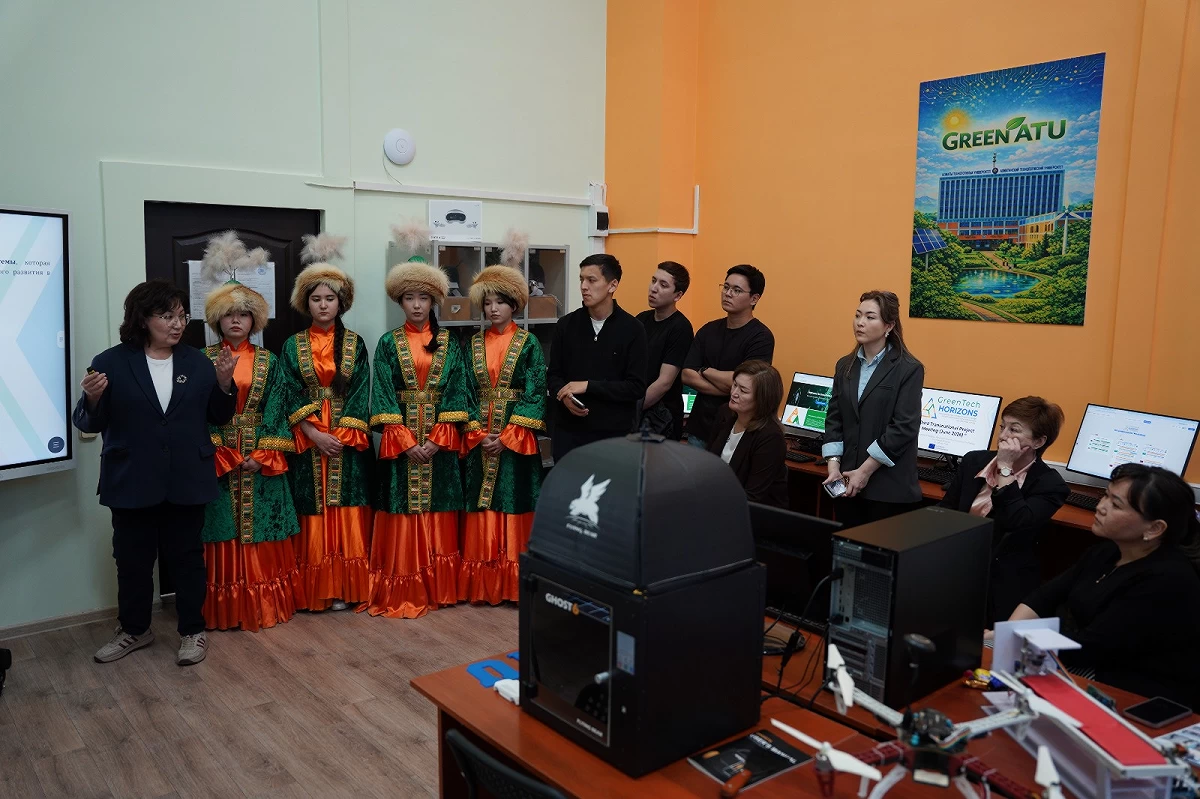
As part of the laboratory's presentation, updated ATU educational programs were presented. The modernization of curricula is carried out in strict accordance with the "triangle of competencies", which includes three critical areas:
- Green Skills: environmental thinking and sustainable technologies.
- Digital Skills: working with AI, VR and big data.
- Entrepreneurial Skills: the ability to commercialize innovations and manage projects.
Student Innovation Exhibition
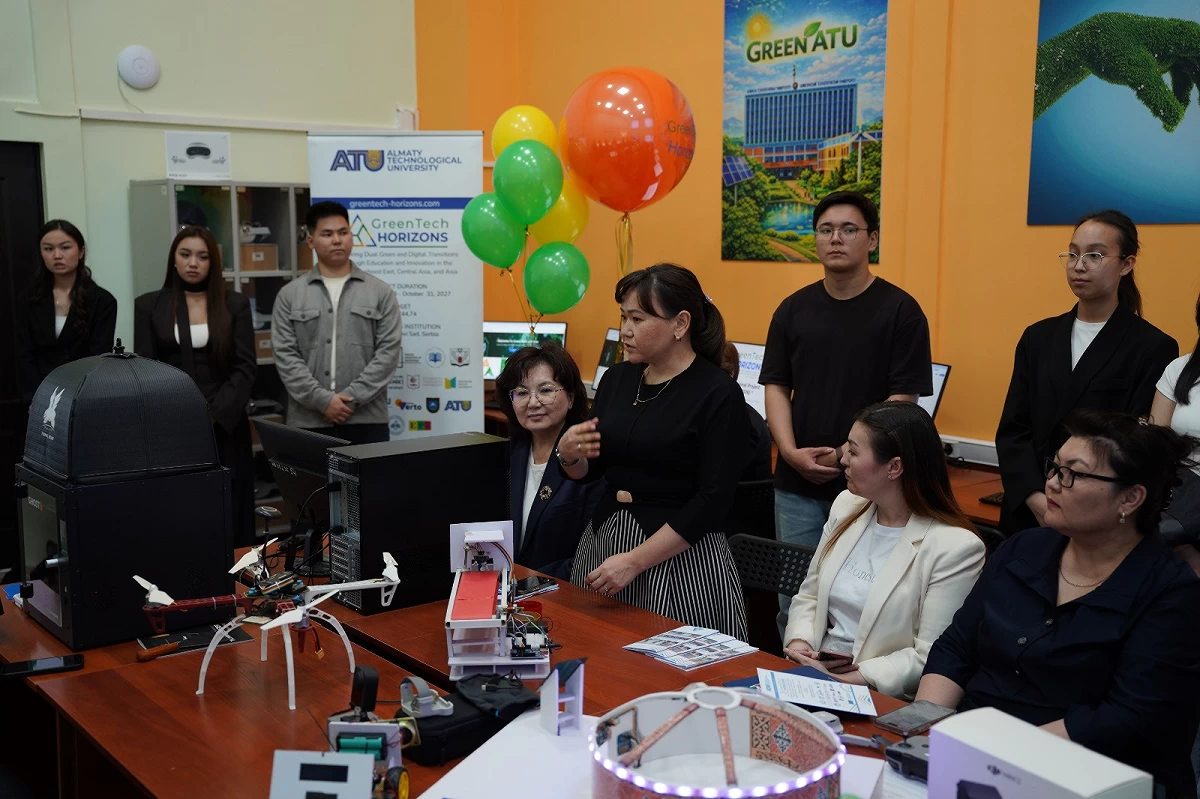
A large-scale exhibition of works by ATU students was presented to the guests of the event. Special attention was drawn to projects in the following categories:
- Smart City: solutions for the automation of urban infrastructure.
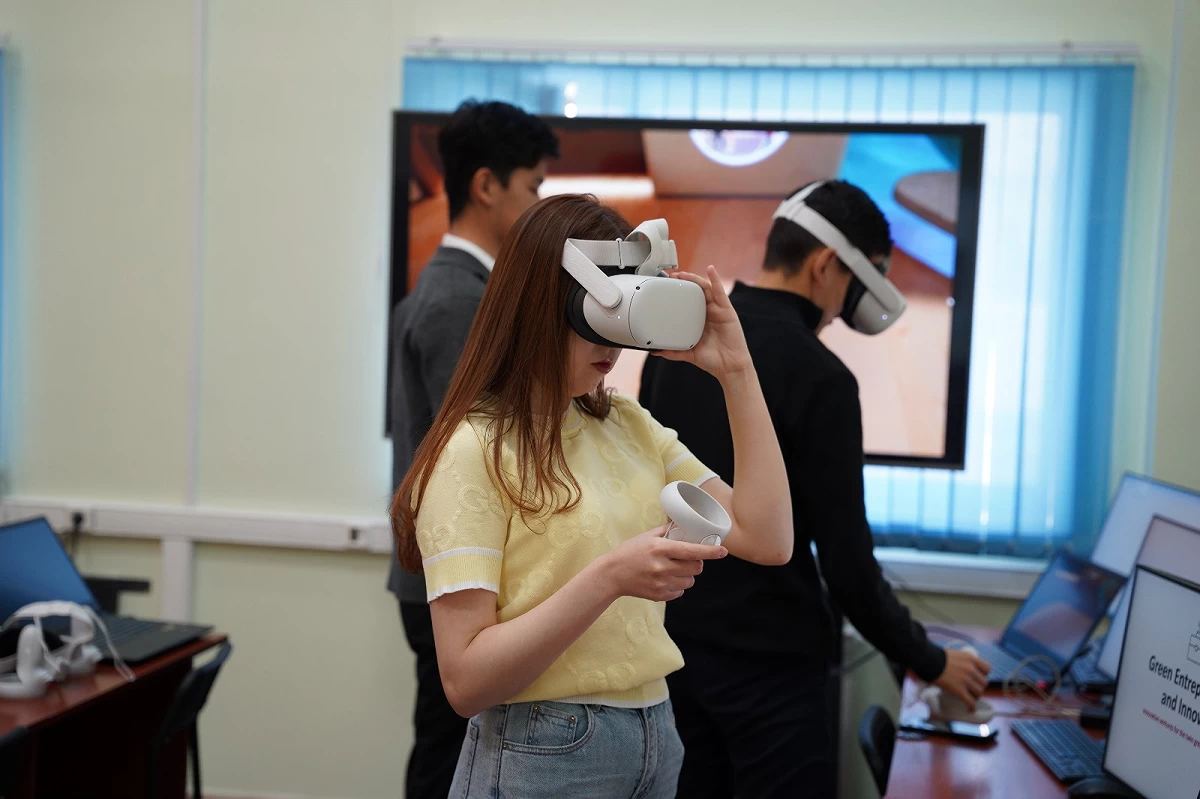
- Virtual reality: educational simulations and immersive models.
Technical equipment and educational process
The laboratory complex is equipped with state-of-the-art equipment purchased with funds from the Erasmus+ GreenTech Horizon grant:
- High-performance supercomputer for AI computing;
- VR glasses and tablets of the latest generation;
- 3D printer for prototyping;
- Thermal imagers and specialized sensors.
The technical base will be actively used for laboratory and research work by students of the departments of Information Systems and Automation and Robotics. The updated disciplines will allow students to master advanced technologies in practice, working with real-world cases in the field of the green economy.